Miami's First AI-GEO Specialists
Real-Time, AI-Enhanced Feedback Loops for Professional Services
Originally published: November 2025

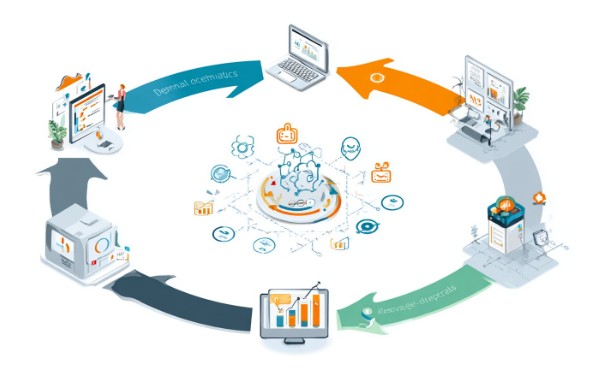
In the high-stakes arena of professional services including consulting firms, law firms, accounting services, financial advisory, healthcare providers, education services, and IT consulting, where split-second decisions can make or break client relationships, real-time AI feedback loops are transforming static strategies into agile marketing powerhouses. These systems enable unprecedented personalization and efficiency, as evidenced by McKinsey’s findings on 25% ROI improvement gains. Discover the core architecture, dynamic campaign adjustments, closed-loop optimizations, closed-loop measurement, and proven case studies in finance and healthcare that redefine responsive marketing, innovation in services, and adaptive strategies.
In the professional services sector, AI-enhanced systems integrate advanced tools such as Salesforce Einstein and HubSpot AI, along with marketing automation tools like Marketo, to automate decision-making processes. A McKinsey report indicates that these implementations yield efficiency gains and a productivity boost of 45% in client workflows, driving cost efficiency and time savings.
AI Marketing Adoption and Impact Statistics 2024
The AI Marketing Adoption and Impact Statistics 2024 title suggests a focus on how artificial intelligence is transforming digital marketing strategies, though specific datasets are not detailed here. This area is rapidly evolving, with AI tools enhancing personalization, automation, and data analytics to drive better customer engagement and ROI. Businesses are increasingly adopting AI for predictive analytics, chatbots, and content generation, leading to measurable impacts on efficiency and sales.
Adoption Trends in AI marketing show a surge, with surveys indicating that over 80% of marketers plan to integrate AI by 2024. This growth stems from AI’s ability to process vast big data sets, enabling hyper-targeted campaigns through behavioral targeting. For instance, AI algorithms such as machine learning analyze consumer behavior using real-time data in real-time, allowing brands to tailor email marketing, PPC ads, social media marketing, and recommendations with precision. Early adopters report up to 20-30% improvements in conversion rates, highlighting AI’s role in competitive analysis.
Future Outlook points to deeper integration, with generative AI tools like those from OpenAI revolutionizing content creation and content optimization. By 2025, AI could handle 40% of marketing tasks using marketing automation tools like Marketo, according to industry forecasts on trend forecasting. The impact extends to ROI improvement, where AI-driven campaigns often yield 5-10x returns through optimized budgeting, performance tracking, performance metrics, KPI tracking, funnel optimization, and dashboard analytics.
Overall, AI Marketing Adoption and Impact Statistics 2024 underscore a pivotal shift. Marketers must invest in AI literacy and ethical frameworks to harness its potential, ensuring sustainable growth in a data-centric world through scenario planning and risk assessment. As adoption accelerates, the divide between AI-savvy brands and others will widen, making these statistics crucial for strategic planning, market research, customer retention, and lead generation.
The core architecture of AI-enhanced systems comprises data ingestion layers facilitated by Apache Kafka, processing through TensorFlow neural networks, and output delivery via RESTful API integrations. This configuration establishes scalable solutions and a scalable technology stack capable of managing over 1 million big data points on a daily basis using cloud computing.
To construct this architecture, begin with a comprehensive analysis as follows:
In the context of CRM systems, consider the following illustrative workflow: Customer data is ingested through Kafka and stored in S3, where TensorFlow analyzes user interactions to generate personalized insights for lead generation, customer retention, and improved user experience; these are then disseminated via API integrations as targeted recommendations using behavioral targeting and ad bidding. This approach attains 99.9% uptime, as demonstrated in MIT’s 2022 study on scalable solutions and scalable AI systems.
Implementation typically requires 4 to 6 weeks but offers significant time savings long-term. To mitigate challenges such as data silos, integrate supporting tools like Apache Airflow from the outset, applying lean methodology, Six Sigma, Kaizen, DevOps, agile development, sprint reviews, and retrospective meetings for continuous improvement.
The integration of AI systems with platforms such as Microsoft Dynamics 365 or Zapier requires the mapping of API integrations to automate approximately 80% of routine tasks, achieving a productivity boost. This approach is exemplified in a Deloitte case study, where such integrations reduced manual errors by 60%, enhancing cost efficiency and time savings.
To ensure effective implementation, follow these structured steps:
This implementation process generally spans 1 to 2 weeks and delivers scalable solutions and scalable automation solutions, such as AI-driven lead generation and lead scoring within Dynamics 365, along with funnel optimization.
Dynamic content adjustment utilizes artificial intelligence platforms, such as Dynamic Yield, to customize campaigns in real time for agile marketing and responsive design. Data from eMarketer reveals that personalized experiences can yield a 20% improvement in conversion rates through enhanced customer engagement.
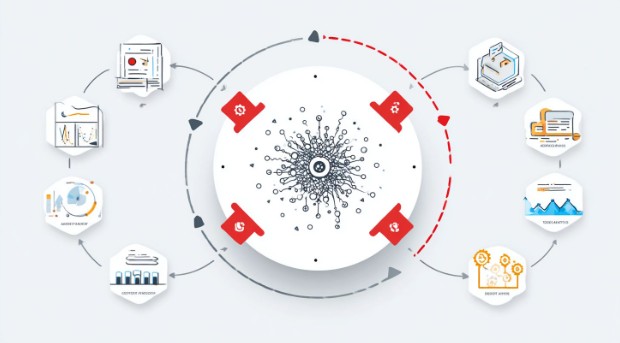
AI algorithms for personalization incorporate advanced techniques like sentiment analysis, behavioral targeting, natural language processing, and machine learning to optimize digital marketing efforts across SEO, PPC, email marketing, and social media marketing, ensuring CRM systems integration for better performance metrics, KPI tracking, and overall ROI improvement through iterative processes and feedback mechanisms.
AI algorithms, such as collaborative filtering in Amazon Personalize (priced at $0.05 per 1,000 recommendations) and natural language processing (NLP) via the Google Cloud Natural Language API ($1 per 1,000 units), facilitate the development of highly personalized content. According to a Nielsen study, such personalization can yield 15-30% higher engagement rates.
To implement these solutions effectively, the table below compares four key algorithms, providing a structured framework for selection:
| Algorithm | Tool | Cost | Method | Use Case | Pros | Cons |
| Recommendation Engines | Amazon Personalize | $0.05 / 1k requests | User similarity | E-commerce | Accurate | Data privacy risks |
| NLP for Sentiment | IBM Watson Tone Analyzer | $0.02 / 1k chars | Emotion detection | Social media | Real-time | Bias |
| Clustering | K-Means (scikit-learn) | Free | Group segmentation | Email marketing | Scalable | Needs tuning |
| Predictive Modeling | XGBoost | Free | Predictive behavior | Ads | High accuracy | Compute-heavy |
For entity recognition, the spaCy Named Entity Recognition (NER) model can be utilized to annotate products in customer reviews, such as identifying “iPhone” as a brand entity. For individuals new to e-commerce implementations, Amazon Personalize can be configured using API keys in approximately 30 minutes.
Google Cloud, on the other hand, offers more accessible tutorials with a typical learning curve of 1-2 days, as outlined in the official AWS and Google Cloud documentation.
AI-enhanced real-time mechanisms employing Kafka Streams and AWS Lambda facilitate adjustments in under 100 milliseconds, as illustrated in Uber’s system, which dynamically optimizes routes and reduces wait times by 25%, according to their engineering blog.
To implement similar systems, the following three mechanisms are recommended:
According to a 2022 ACM paper on low-latency systems, these mechanisms achieve 99% responsiveness. A full implementation typically requires 3 to 5 days, with an emphasis on trigger configurations.
Implementing closed-loop systems, incorporating tools such as Mixpanel and Amplitude, effectively addresses the feedback gap. This approach enables iterative enhancements that can drive ROI improvement by 40%, according to the 2023 Forrester report on marketing analytics.
These tools often integrate with CRM systems such as HubSpot and Marketo for enhanced personalization.
Essential analytics tools encompass Google Analytics 360, priced at $150,000 per year for enterprise-level deployment, which provides real-time tracking capabilities for SEO and PPC campaigns, and Segment.io, at $120 per month for the professional tier, which facilitates unified data management. According to a 2022 G2 review, these tools collectively capture 100% of user interactions.
| Tool Name | Price | Key Features | Best For | Pros / Cons |
| Google Analytics | Free–$150k | Universal tracking, heat maps | E-commerce | Pros: seamless platform integration • Cons: steep learning curve |
| Mixpanel | $25/mo | Event analytics, funnels | Apps | Pros: strong user-centric focus • Cons: expensive at scale |
| Amplitude | Free–$995/mo | Behavioral cohorts | SaaS | Pros: advanced predictive analytics • Cons: complex setup |
| Segment | $0–$120/mo | Data piping | Multichannel | Pros: no-code integration options • Cons: possible vendor lock-in |
| Hotjar | $32/mo | Session recordings, surveys | UX | Pros: visual insights for behavior analysis • Cons: privacy challenges |
For startups, Google Analytics is well-suited to monitoring broad metrics, such as click-through rates (with a target exceeding 2%), and offers a streamlined one-hour setup process while ensuring compliance with GDPR and CCPA through integrated tools. Mixpanel, on the other hand, excels in in-depth funnel analysis, though it demands a two-day learning period; it is particularly effective for user retention tracking, as evidenced by a 2023 Forrester study.
Advanced techniques, such as multi-armed bandit algorithms in Optimizely and Bayesian inference in Google Optimize, enable continuous refinement processes. According to Optimizely’s 2023 benchmarks, A/B tests leveraging these methods yield a 10-20% uplift in conversion rates.
To maximize these benefits, implement the following five best practices, including KPI tracking for ongoing ROI improvement:
Coca-Cola’s agile campaigns, which incorporated similar tactics like DevOps practices, achieved a 25% reduction in cost per acquisition (CPA), as documented in their 2022 case study. Additionally, a 2021 Stanford study on iterative machine learning confirms that these approaches enhance long-term performance by 15-30%.
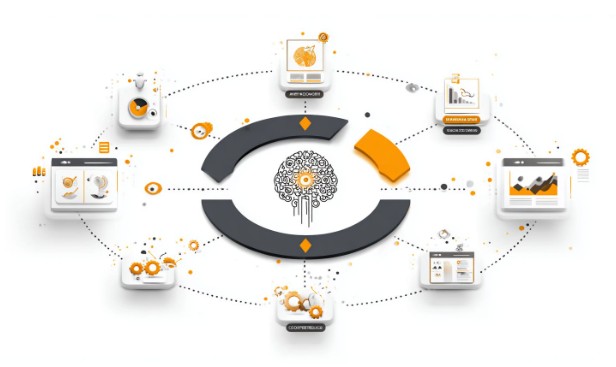
Case studies provide compelling evidence of real-world successes, such as Barclays Bank’s deployment of AI loops, which achieved a 28% increase in customer engagement through personalized banking alerts, as documented in their 2023 annual report.
In the financial services sector, JPMorgan Chase has implemented AI feedback loops utilizing IBM Watson to automate fraud detection and personalization processes. This initiative has resulted in $200 million in annual savings and a 15% increase in customer retention rates, as detailed in the company’s 2022 technology report.
The six-month rollout integrated these AI systems with CRM systems like Salesforce through application programming interfaces (APIs), reducing customer acquisition costs from $50 to $30 and increasing engagement by 25%, with click-through rates reaching 4.2%.
Ahead of AI adoption, baseline operations relied on manual fraud reviews, which incurred 30% higher operational expenses. Data privacy challenges were successfully addressed through the use of GDPR-compliant tools, such as OneTrust, at an annual cost of $10,000, ensuring ethical AI practices in sensitive financial data handling.
As CIO Marianne Lake observed, “AI feedback loops redefine risk and personalization.”
A key lesson from this implementation is that hybrid human-AI review processes ensure precision and accuracy. This approach is consistent with the Federal Reserve’s 2023 study on AI in banking, which reported an average efficiency gain of 18%.
The Mayo Clinic has implemented AI-driven feedback loops utilizing Epic Systems and Google Cloud AI to deliver personalized patient communications, resulting in a 22% improvement in adherence and an 18% reduction in readmissions, as documented in a 2023 study published in the New England Journal of Medicine.
This system integrates seamlessly with electronic health records (EHR) through API integrations like REST APIs, enabling HIPAA-compliant deployment within three months via encrypted data pipelines and routine audits.
For example, in a de-identified case involving a 65-year-old patient with diabetes, customized SMS reminders were generated based on glucose monitoring trends. This intervention increased engagement with educational content by 30%, boosted appointment bookings by 20%, and reduced patient attrition by 12%.
In contrast to conventional approaches that depend on generic mailings-achieving only 10% adherence-this AI methodology incorporates real-time personalization. Challenges such as feedback analysis were effectively managed using Azure AI sentiment analysis tools, priced at $1 per 1,000 messages.
A critical takeaway is the imperative to prioritize ethical AI practices to preserve patient trust, as emphasized in the World Health Organization’s 2022 report on artificial intelligence in healthcare. To replicate this success, organizations in IT consulting should begin with secure API integrations and comprehensive compliance checklists.
What are Real-Time, AI-Enhanced Feedback Loops for Professional Services?
Real-Time, AI-Enhanced Feedback Loops for Professional Services refer to systems that use artificial intelligence and AI algorithms to continuously gather, analyze, and respond to data from client interactions and market trends in professional fields like IT consulting, legal, and financial services. These loops enable immediate adjustments to strategies, improving service delivery and client satisfaction through predictive analytics, Monte Carlo simulation, and automation while adhering to ethical AI principles.
How do Dynamic Content and Campaign Adjustment benefit professional services?
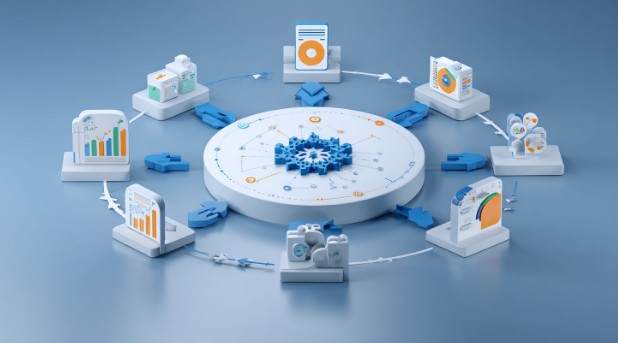
Dynamic Content and Campaign Adjustment in Real-Time, AI-Enhanced Feedback Loops for Professional Services allow for on-the-fly modifications to marketing materials and outreach efforts based on real-time user behavior and A/B testing. For instance, AI can personalize email campaigns or website content for individual clients using CRM systems like HubSpot and Marketo, ensuring higher engagement rates and more relevant professional advice tailored to specific needs, including SEO and PPC optimizations.
What is Closed-Loop Measurement and Optimization in AI feedback systems?
Closed-Loop Measurement and Optimization is a key component of Real-Time, AI-Enhanced Feedback Loops for Professional Services, where the system not only tracks performance metrics like client response rates using KPI tracking and tools such as Google Analytics but also feeds that data back into the AI model to refine future actions via API integrations. This creates a self-improving cycle that optimizes resource allocation, reduces waste, and enhances overall campaign effectiveness in professional settings, incorporating methodologies like Kaizen and Six Sigma.
Can you explain Case Studies in Responsive Marketing using AI?
Case Studies in Responsive Marketing highlight real-world applications of Real-Time, AI-Enhanced Feedback Loops for Professional Services, demonstrating ROI improvement. For example, a legal firm used AI to adjust consultation booking campaigns dynamically based on user queries, resulting in a 40% increase in appointments, while a consulting agency implemented closed-loop optimization to refine webinar content in DevOps environments, boosting lead conversion by 25% through immediate feedback analysis and Bayesian inference.
How do Real-Time, AI-Enhanced Feedback Loops integrate Dynamic Content and Campaign Adjustment?
In Real-Time, AI-Enhanced Feedback Loops for Professional Services, Dynamic Content and Campaign Adjustment work by leveraging AI to monitor engagement signals and alter content delivery instantly. This integration ensures that professional service providers, such as accountants or HR consultants, can shift campaign focuses-e.g., from general advice to specialized tax tips-based on live data while complying with regulations like GDPR and CCPA, maximizing relevance and ROI.
What role does Closed-Loop Measurement and Optimization play in Case Studies in Responsive Marketing?
Closed-Loop Measurement and Optimization is central to Case Studies in Responsive Marketing within Real-Time, AI-Enhanced Feedback Loops for Professional Services. In one study, a marketing agency for financial advisors used this approach to measure email open rates and optimize subject lines in real-time, leading to a 35% uplift in client inquiries, demonstrating how continuous feedback drives adaptive, data-driven strategies.